07720 425 897

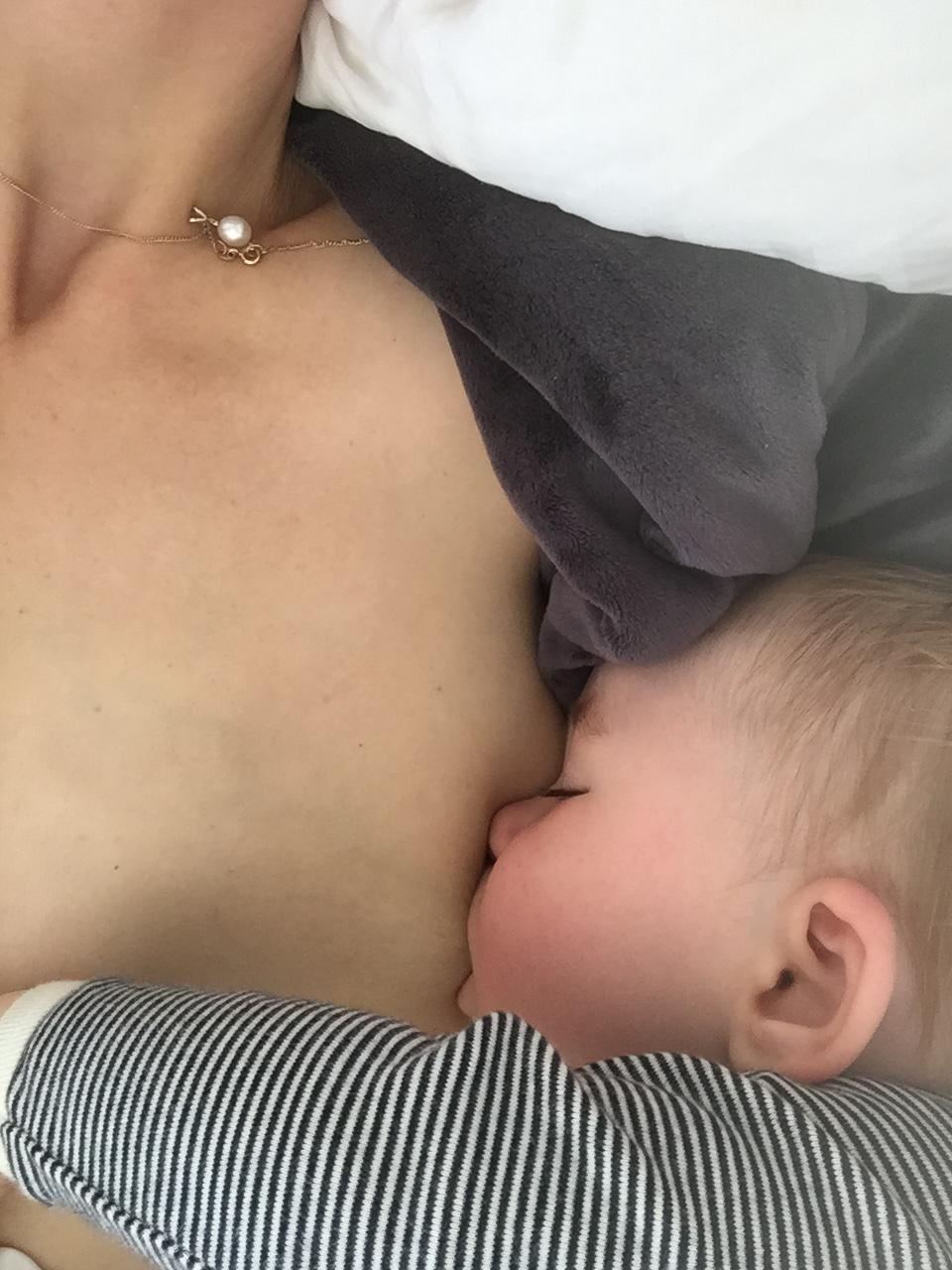
I dread breastfeeding

27 Apr 2020 | Blog

“I hate the feeling that he’s on me all the time. I dread breastfeeding him. It makes me feel really low.  People keep telling me that breast is best.  I want to give him formula but I feel like I am letting him down.”

This was whispered to me by a tearful mum with a five week old baby at our feeding drop in.  We had talked about her problems – her sore nipples, her isolation, the baby’s total dependence on her.  Finally she admitted that she hated breastfeeding.  Sometimes she felt an almost overwhelming low mood as she fed her baby. This seems to be one of mothers’ best kept secrets, why don’t we talk about it?

What could be going on?  Often there are many complex and subtle issues at play. Women can dislike breastfeeding for many reasons: physical, physiological, and psychological.

For some women, breastfeeding is not going well.  Maybe her breasts or nipples are uncomfortable, or her baby fusses, bites or tugs at the breast.  There are many reasons why a mother might come to dread each feed.  Most of these can be resolved or managed with some dedicated, sensitive support from a lactation professional, so if this applies to you please reach out for some help.

A little understood phenomenon is Dysphoric Milk Ejection Reflex (D-MER). Mothers suffering from this physiological condition feel intense sadness and low mood from just before a breastfeed and for a couple of minutes of it starting, some experiencing it again with subsequent let downs through the feeding session.  This is a chemical response in the brain to inappropriately dropping dopamine levels. The low dopamine triggers temporary but overwhelming sadness, anxiety, irritability and/or restlessness.  It is not associated with physical pain or nipple trauma, or depression, and a mother cannot “think herself out of it.”  There is more information and support for mothers with D-MER here https://d-mer.org/.

It may be that a mother is finding the overwhelming need for her attention just too much.  There is something so intensely draining, physically and emotionally, about being entirely responsible for the well being of a baby.  Baby is utterly dependent on her, demanding attention at unpredictable times of day and night with no let up. She is constantly on edge, waiting for the next time baby needs her. Add to that sleep deprivation, which is used as a form of torture for a reason, and a woman can feel like she is losing her mind.  If this is you, please recognise that this is often a totally normal response to an intense physical and emotional transition.  Be kind to yourself.  This is doubly true if you have had a difficult birth or another situation in your life that is compounding the issue. Becoming a new mother can a difficult, as well as incredible, part of your life’s journey.   As a society we are not good at acknowledging this and giving appropriate loving support. Please call on your friends and family, take as much help as you can, and reach out to professionals and supportive communities who can assist you.  Please note that this is general advice.  If a mother or her partner is worried about her overwhelming low mood, hallucinations, or thoughts of harming herself or her baby, she needs some urgent medical attention.

Some women find that breastfeeding exacerbates their existing low mood, anxiety or depression. The isolation, especially if worried about going out or feeding in public, makes it worse. Others find that breastfeeding can help in increasing oxytocin and bonding and lessen the symptoms.

Breastfeeding researcher Dr Alison Strube writes “We have much to understand about the biology of postpartum depression…when a mother is experiencing depression and anxiety symptoms, my job as a clinician is to ask what parts of her day bring her joy and peace, and what makes her symptoms worse.” This is key.  For some women, breastfeeding makes her dislike her baby eight to ten times a day.  We need to acknowledge this.  Sometimes there are strategies that can make the experience better, and other times a mum and baby can be better served by a move to formula milk.  If this resonates with you, please call me or one of the many breastfeeding organisations who can really listen to you without judgement, and help you to find a way forward.

I have worked with women who have experienced sexual assault or abuse, for whom birth and breastfeeding can be especially challenging. For some, the process has been handled sensitively and has been healing. In other cases we must recognise that mum’s mental health comes first, and that bottle feeding might be much more appropriate.  Babies thrive on love and formula milk.

Feeling like a failure

“I called an independent midwife because I am so anxious and not coping.  I am ashamed.  We are such failures.”

This was the whispered confession of a mum of a two week old, just this week.  I think she was surprised to hear me say “Getting help is such a positive first step.  Of course you are not coping, you are a brand new Mum suffering from the after effects of a traumatic birth and huge blood loss.  Your poor body is trying to recover, to make more blood and work on that damaged perineum.  You family live in another country, so it is great that you are able to call a professional for help.”

Where does this feeling of failure come from? When I asked her more about it, she said that this was the first time that she had not succeeded in something.  All through her professional life, she followed the rules and achieved the outcome she expected.  A new baby had thrown her completely.  Her baby daughter would not settle in the Sleepyhead, she would only sleep on Mum and Dad, who felt like they could not close their eyes.  Everything was overwhelming.

It can be really hard to admit that you are not coping, and to reach out. As new parents we need to learn how to be nurtured again, to be out of control and vulnerable and to seek and accept help from others.  This is not a failure!  It is a new way of being.


Recent Posts

Is your baby tracking app actually helping?

When I sit down with a new mum to talk about feeding, she almost inevitably reaches for her phone. “Look, his feeds lasted an average of 29 minutes yesterday, four hours forty seven minutes in total, and here he was overtired in his wake window, and he didn’t get a...

Bottle refusal nightmares

I hear you. It’s getting desperate. You’ve been trying for months to get your baby to take a bottle. You’ve read every forum, your kitchen is bursting with bottles of all shapes sizes and flow rates. You’ve tried all the milks at different temperatures, calm,...

How to choose infant formula milk

In the UK a standard first formula labelled 1 of any brand will suit most babies.  Ready to feed formula is considered safest for your baby in the first two months. Many parents find anxiety levels rising when confronted with the huge choice of formula milks...

Baby-led breastfeeding

Your healthy, full term baby is born with the reflexes and instincts to breastfeed.  You do not need complicated instructions or technical videos, you and your baby can figure this out, especially if you snuggle uninterrupted skin to skin.  Your baby retains the...

How to choose a bottle

Pick a bottle and teat flow rate suitable for the age of your baby.  You might need to experiment to find the optimal bottle for your little one.  Conical teats tend to be well tolerated by many babies. New parents often worry about what to buy for their baby, and...

Bottle feeding stress?

Bottle feeding isn’t the easy option! I have worked with thousands of bottle feeding parents. You are not alone with your worries. Here are the top ten things bottle feeding parents stress about. 1. Guilt Whether bottle feeding was a positive choice or forced upon...

Breastfeeding with nipple piercings or tattoos

Can I breastfeed with pierced nipples? Yes! Please remove your nipple jewellery before breastfeeding. Jewellery can easily get dislodged or damage your baby's mouth. Most people take it out for the whole time they are breastfeeding their baby, others do it feed by...

Bottle feeding your fussy four or five month old

Your little one was doing fine with the bottle.  You were feeling slightly smug about the great patterns you were getting into. Maybe they were even sleeping a good chunk of the night.  Then, from nowhere, they only want to take a few sucks on the bottle and refuse...

Why bottle feed?

As a lactation consultant, I am widely expected to promote breastfeeding, and of course I help families with this. Breastmilk is the optimal food for human babies and breastfeeding can be awesome. However, bottle feeding is a vital part of many families’ feeding...

Top ten reasons why your baby won’t take a bottle

About half of my work is with parents of babies who cannot bottle feed well or refuse a bottle entirely.  Frazzled parents are often at the end of their tether, their baby is unhappy and feed times become a nightmare.  Sometimes there is a clock ticking, such as a...

Shall I harvest colostrum before the birth?

Many midwives suggest that women hand express and collect their colostrum from about 37 weeks pregnant.  It is considered a useful and empowering skill to learn, and the extra colostrum would benefit an unwell baby. Colostrum harvesting could be particularly helpful...

Feeling like a breastfeeding failure?

Lots of new mums have cried on me this week.  And every week for the last eighteen years, to be honest. They say heartbreaking things like: “I cannot fully breastfeed my baby, I am letting him down”“I have failed at breastfeeding” “I feel terrible when I need to give...

Your top five bottle feeding questions answered

As I work with new parents on both breast and bottle feeding, I get asked a lot of questions about bottles. These are short answers.  If you have specific questions about bottle feeding your baby please reach out to me or your healthcare providers. 1. Will my baby get...

Low milk supply? Check these things.

Why is supply low?  This article starts with the most obvious reasons, and works through some more that you might not have heard of. For your breasts to make milk, they need to have functioning breast tissue with intact nerves and blood supply, and your body needs to...

Why write a book?

My new book Breast, Bottle or Both: How to Feed Your Baby Your Way is about to come out in paperback on Kindle, Apply and Google Play Books. With so much information available free online, why did I bother putting something in print? Parents are overwhelmed with...

LGBTQ+ baby feeding

All parents deserve informed, kind and unwavering support. In this article I share feeding questions and experiences of some of the families I have worked with, partly to open everyone's eyes to what might be possible. I know, I am a fifty plus white middle class...

How to avoid sore nipples

My job is to help mums and babies to feed comfortably and effectively. Lots of women complain about sore nipples and many think it is normal to have pain in the early days. But pain is a sign that something is wrong. Breastfeeding should be relaxed and enjoyable!  If...

Can I take breastmilk or formula through airport security?

Yes!  The only thing you cannot take in hand luggage is frozen breastmilk. Here are the Government guidelines for travelling from the UK. Baby food and baby milk When travelling with a baby you’re allowed to take enough baby food, baby milk and sterilised water for...

Why we need to talk about bottles

My new book Breast, Bottle or Both, comes out this week.  I am thrilled that new parents will have non-judgmental support and guidance in all aspects of feeding their baby.  I am also really nervous.  Why?  Because strangers online are likely to share their very...

Do I need to pump and dump?

We all want to keep our babies safe and protect them from harmful substances in our breastmilk.  So when is it necessary to express milk and throw it away? Right up front, I really don't like the phrase "pump and dump."  Expressing milk is an act of love from a mother...