

Congratulations on your babies! Whether you are pregnant, or in the early stages of life with your newborns, it is great that you are seeking information about how to feed them.
This is likely to be one of the most wonderful and yet confusing and exhausting periods of your life. We know that breastmilk provides your babies with the best possible nutrition and builds their immunity, especially when they are tiny and vulnerable. However, twins and triplets often come a little early, and tend to be smaller, sleepier, prone to jaundice, and trickier to feed. It is possible that they may need time in Neonatal Intensive Care (NICU) or transitional support in hospital until you are able to take them home. In situations that feel more medicalised than you might like, providing breastmilk can be a lovely way for you to feel more involved in your babies’ care.
If you would like to breastfeed, please take advantage of all possible support to enable you to give your babies as much breastmilk as possible. This article discusses some of the possibilities and challenges along the way, alongside practical advice on how to manage.
Is it possible to exclusively breastfeed more than one baby?
When a mother’s body is working well, her breast tissue and hormones help her to produce sufficient milk to fully meet the demands of her little ones. As the babies take milk at the breast, it gets replaced. This means that is it often possible to exclusively breastfeed twins or triplets, especially the closer they are to full term when they are born. Some women find the process immensely rewarding, especially when other parts of their babies’ birth and early lives may have been outside of their control.
Realistically, many mothers who want to exclusively breastfeed find that it can take considerable time and effort.
What are the unique challenges around feeding multiple babies?
Any number of the factors below can interact to make things more difficult for a new mother of multiple babies. Many women have unrealistic expectations of themselves and their babies, and this is intended to inform and support your decision making rather than to make you feel like the odds are stacked against you.
Factors that might impact on milk supply
Pre-term birth
A woman’s breasts develop the glandular tissue and blood supply they need throughout pregnancy. If her babies are very early, the breasts will not have done all the preparation and growing they need to maximise milk supply.
Medical complications
Multiple pregnancies can be associated with other medical conditions, including pre-eclampsia and gestational diabetes. Sometime a mother will be feeling too unwell to breastfeed, and the medication required can also impact on her milk supply. Women being treated for severe pre-eclampsia often report feeling “out of it” for the early days of their babies’ lives.
Blood loss at the birth
Significant blood loss during the birth can have a big impact on the mother. She can feel very faint and tired. She may not be able to fully interact with her little ones to feed, or express milk, for hours or days. This can result in reduced milk supply. In many cases there is a temporary period when supply is lower than it should be and supplemental formula will be needed. Sometimes a severe bleed can result in the pituitary gland in her brain being unable to make the prolactin required to get milk production off to a good start. On occasions her body will not be able to produce sufficient milk in the long term.
Recovering from caesarean section
When a mother is recovering from abdominal surgery, it can be hard for her to move around and attend to her babies. This can result in a delay in milk coming in, and make it more likely that the babies will need supplemental feeds in the meantime.
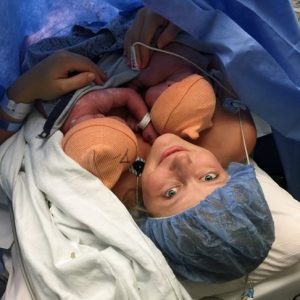
Exhaustion
Caring for multiple babies around the clock is incredibly demanding. When a mother has so little time to rest, recover and look after herself, milk supply is sometimes compromised. Mothers with wider work or family commitments, or who have been separated from their babies, may find it especially difficult to feed and/or express sufficiently to maintain a full milk supply for more than one baby.
Factors affecting the babies’ ability to breastfeed
Ability to suck and swallow
Babies learn to suck in the womb, and this becomes more effective after about 34 weeks gestation. If the babies are born before this, their suck reflexes are not yet sufficiently mature to breast or bottle feed, and they might require feeds through a tube into their nose and down into their tummy. As they grow they will gradually be introduced to the breast or bottle and they will learn to coordinate their suck, swallow and breathe pattern.
Tiny mouths
Even if they can suck, tiny babies tend to have little mouths, and sometimes they simply cannot fit around their mother’s nipple. In these cases babies require expressed milk or formula from a narrow teat until they can latch on directly. Mothers with flatter nipples might find that a small nipple shield can help a little baby to maintain their attachment to the breast.
Sleepy babies
Premature babies can often be excessively sleepy, and use up their energy reserves quickly. They are also more likely to get jaundiced, which can make the situation even more challenging as they are both sleepy and sometimes in need of phototherapy (see https://cathysage.com/my-newborn-has-jaundice/ ). In many cases, tiny sleepy babies need help in getting their feeds efficiently and effectively.

Need for medical attention
Babies may need some extra medical support, especially if they are very small. While many hospitals promote skin to skin care when possible, the need for treatment and monitoring can make it harder to move your babies around and feed them directly.
Getting off to the best possible start
You can prepare to breastfeed your little ones before they are born. It is very sensible to find out about local sources of feeding support. In terms of kit, you might consider where to hire or purchase a double breast pump, and gather some narrow teat feeding bottles and a steriliser. Many parents suggest obtaining a twin feeding pillow and at least one bouncy chair (for one baby while you deal with the other). Your local twins club can be an excellent source of peer support and second hand items.
Before your babies are born, after about 36 weeks of pregnancy, you could try hand expressing colostrum (see https://cathysage.com/confused-about-expressing/). Squeeze behind your nipple and collect any drops of colostrum into little feeding syringes, then pop them into a food container and store them in the freezer. Your midwives can provide the syringes and instructions on how to do this. Your little ones may benefit from the colostrum soon after birth, and it is a useful skill to practice in advance. Ask your midwives about when to bring this milk into hospital, and where it can be stored if, for example, you have a planned caesarean section. Most postnatal wards have a special milk fridge for this purpose. Your milk will need to be properly labelled with sticky bar codes (usually kept in the back of your notes), and the date and time added.
New parents of multiples benefit from hands on support to cope with the physical and logistical as well as the emotional transition to new parenthood. Mothers of multiple babies commonly have a caesarean section, which is major surgery and it takes significant time to recover. It is a great idea to prepare family and friends, or source paid supporters such as postnatal doulas or night nannies to help in the early weeks.
Immediately after the birth
It is wonderful to hold your babies skin to skin after they are born and for as long as you can in the early days and weeks. This helps them to feel relaxed and happy, regulates their temperature, be colonised by your bacteria, and be in the perfect place to feed. When the babies are tummy to tummy with you, with their mouths next to the nipples, they are primed to use their natural instincts to start to breastfeed. Ask your midwives for help in getting your babies feeding within an hour to two of birth. If skin to skin contact is not possible please do not worry, there will be time for that when you are all feeling better. Your babies will enjoy skin to skin with another special person if they are well but you are not up to it yet.

The first few hours and days
Your babies will need regular feeds, at least every three hours from the start of one feed to the start of the next. It is very likely that you will work with your care givers on a feeding plan, especially if your babies are small or clinically vulnerable. Keep clear notes of which baby has done what, in terms of feeds and nappies. There are apps available to help with this. Make sure that everyone involved in your babies’ care also adds to the notes.
If your babies cannot breastfeed
If your babies cannot breastfeed effectively, you have two main priorities. The first is to feed your little ones somehow, and the second is to build and maintain your milk supply until they can breastfeed.
If you have premature babies in the Neonatal Intensive Care Unit (NICU) the staff will talk to you about the most appropriate way to feed them. If your babies are not able to suck and swallow, or be moved from their incubator, they will be fed through a tube that goes through their nose and into their tummy. Most hospitals promote “kangaroo care” when possible. This means that the babies are cuddled against their parent’s skin to skin for as much time as possible. We know that this decreases stress and promotes healing in the newborn, and it is lovely for the carers too.

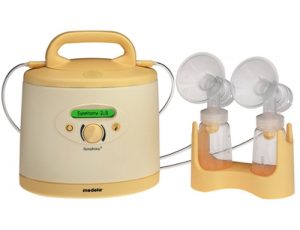
The ideal food for all babies is breastmilk. If you can express colostrum, you will be invited to do this by hand until your milk comes in. You will be encouraged to express as regularly as possible, from both sides, ideally every three hours including at least once overnight. The nurses can help you and provide the feeding syringes to collect the milk. Once your milk is there in quantities greater than 5 ml per side, you can use an expressing machine. Ask the nurses for a hospital pump and the kit required to express and store your breastmilk. Short, frequent expressing is more effective than one or two longer sessions. If one or more babies are also being breastfed, it makes sense to express after the breastfeed. Women who have been discharged home might benefit from hiring a hospital grade pump from the manufacturer or a local pharmacy.
Breastmilk and breastfeeding is known to be an effective form of pain relief for babies, so might be encouraged during medical procedures or immediately after them.
If a mother is not able to breastfeed, or fully breastfeed, her babies in NICU, it might be possible for the little ones to receive carefully screened milk from a donor. This is the next best thing to mother’s milk, and helps to protect babies from complications including necrotising enterocolitis (inflamed intestines).
In cases where no breastmilk is available, the hospital will provide infant formula suitable for your babies depending on their gestational age.
Transitioning to breastfeeding
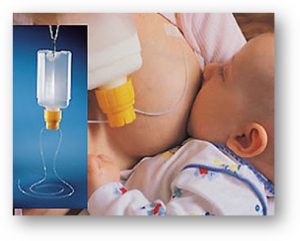
As your babies get older and more able to take milk at the breast, you might be able to breastfeed at least some of the feeds, or a part of each feed. While the babies make this transition, it might be appropriate for them to receive additional milk through a feeding tube into their tummy, finger feeding, or supplemental nursing system taped to the nipple while they are at the breast. In this way they learn to associate breastfeeding with a comfortable feeling of being fed. On other occasions, it might be sensible to offer the breast first, and then provide a top up of expressed milk, donor milk or infant formula from a bottle (see below). Infant feeding specialists and NICU nurses will be able to help and advise in this situation.

Topping up your breastfeeding babies
You might find yourself in a situation where your babies are receiving some breastmilk direct from the nipple but still need extra top ups after some or every feed. You might be asked to breastfeed, top up your little ones with expressed milk, and then express in advance of the next feed.
Most new parents do not find a cycle of breastfeeding, topping up and expressing sustainable for long. There could be a balance to be found between time at the breast and time spent expressing. It might be sensible to breastfeed while you can see that your babies are actively swallowing milk, and then take them off to be topped up by a partner while you focus on expressing. Every case is different. The babies and mother will benefit from time skin to skin while practicing feeding. However, the mother’s needs for rest and recovery should not be overlooked, especially after a surgical birth. There is more on this topic here https://cathysage.com/breastfeed-top-up-express-repeat/
My babies are breastfeeding! Now what?
One breast for each baby?
It is often the case that one breast naturally produces more than the other, or one baby is better at feeding than the other. Generally, it helps to swap around each feed so that both babies stimulate and receive milk from both breasts.
Do I feed my babies together?
When you are all learning, it can make sense to feed the babies individually. However, this takes considerable time and you might feel like you do nothing but feed! When both babies are effective feeders, latching them on together saves time. It takes practice though, and you either need someone to pass you the babies once you are comfortable or a system where you can sit down and still reach them. Feeding pillows and bouncy chairs can be very helpful tools. Firm, flat feeding pillows are better than squishy rounded ones.

What feeding positions are suitable?
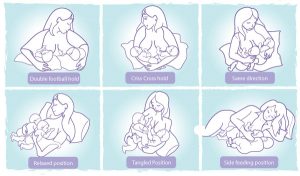
Various positions allow a mother to feed two babies at once. The most popular include the rugby/football hold where both babies are held underarm, or the “koala” hold where both babies are angled down the mother’s body next to each other. While a mother recovers from a caesarean, she might prefer the underarm hold as it keeps her babies off her bump and away from her scar.
Certain positions, including the rugby/football hold, are much easier with a good-sized feeding pillow so that one baby is held in the right place while the mother manoeuvres the other one. It really helps to have another adult available to pass the babies to mum. Once a mother has recovered from the birth, which might take several weeks, she may benefit from having one or two newborn bouncy chairs for the babies so that she can keep them close to her while getting into feeding positions.
Do I wake my babies to feed them?
It might be necessary to wake your tiny babies on a schedule especially if they are excessively sleepy. Later you could be more baby led, but many parents of twins and triplets insist on feeding them at the same time rather than spending what feels like every moment of their life feeding!
How does mixed feeding work?
Many parents of multiples will mixed feed, offering formula top ups to their babies as necessary or on a schedule. This allows other people to get involved with feeding the babies, takes pressure off the mother and gives her some space to rest and heal. It is important to realise that breastfeeding works on supply and demand, so if a woman is not feeding or expressing to meet her babies’ needs then her milk supply will go down. Some women find that they can maintain their milk supply at a certain level while also using some formula, others find that their supply tumbles to a point where they consistently have to offer formula top ups for each feed. We know that any breastfeeding at all is beneficial for the mother and the babies, but mixed feeding takes more time and causes additional complication for some parents.
If breastfeeding is going well from the start, and parents want to introduce some bottles of formula, it is advisable to wait for roughly 4-6 weeks for milk production to stabilise and everyone to get confident with breastfeeding before introducing formula. Many women find that their milk supply is more flexible after a few weeks, and will adjust well to some missed feeds. It is so individual. Some women will need to feed or express a certain number of times a day to keep up supply.
Many parents find that offering a formula bottle in the evening has least overall impact on milk supply. Giving formula in the early hours is often counterproductive, as a woman’s milk supply is highest at this time so it is easier to feed or express, and her breasts might be uncomfortably full if she misses a feed.
If a certain number of feeds in a day are going to be formula from a bottle, it makes sense to alternate the bottles with breastfeeds/expressing so that the breasts do not remain full for excessive time. Leaving the breasts full for extended periods causes an associated reduction in milk supply and discomfort for the mother.

How much milk will my babies need?
This will vary depending on the age and size of your babies. Your midwives or neonatal nurses will help you to work it out. Obviously, we cannot tell exactly how much milk babies take from the breasts, we can only get an idea from watching and listening to swallows, and looking at the output in the nappies. We look out for feeding cues (opening the mouth, trying to suck fingers, trying to suck anything, crying) and respond to our babies. Formula manufacturers use an equation for amount per feed by age and number of feeds, and this is written on the packaging. Again, this is a guide, and we need to be led by our babies to an extent. There is more here https://cathysage.com/am-i-making-enough-milk-for-my-baby/

Bottle feeding your babies
Please see this article on choosing bottles and formula for your babies https://cathysage.com/how-to-choose-bottles-and-infant-formula/
For little ones that are not taking bottles well, there is more information here https://cathysage.com/my-baby-wont-take-a-bottle/
Realistic expectations
Parents of multiples will tell you that feeding them is a full time job for at least two people! Keeping these little babies fed, clean and rested is all you can manage, and looking after yourselves can seem impossible. Never let anyone imply that you are not coping.
I hope that you enjoy this incredible time ahead.
To book a consultation with me before or after your babies arrive, please click here.
Further support
https://twinstrust.org/let-us-help/parenting/under-1s/feeding/breastfeeding.html
https://breastfeedingtwinsandtriplets.co.uk/
https://abm.me.uk/breastfeeding-information/breastfeeding-twins/
http://www.breastfeedingtwins.org/